
Foundation Repair
Garage Door Lintel Repair
A garage door lintel carries the weight of the wall above the widest opening in your house. When it rusts, bows, or loses its bearing, the fix isn't cosmetic — it's structural, and the masonry above it is what tells you first.
What a Garage Door Lintel Does
A lintel is the structural member spanning the top of an opening. It picks up the load of everything above — brick veneer, framing, sometimes a second story — and carries it sideways to the masonry on either side of the door. In Triangle-area homes it is usually a galvanized steel angle tucked behind the brick, occasionally reinforced concrete or a precast section.
The garage door is normally the widest opening in the building, often sixteen feet or more, so its lintel is the hardest-working one you have. It is also the one most exposed to weather, because it sits above an opening that faces the driveway with no porch or overhang over it.
Signs of Lintel Failure
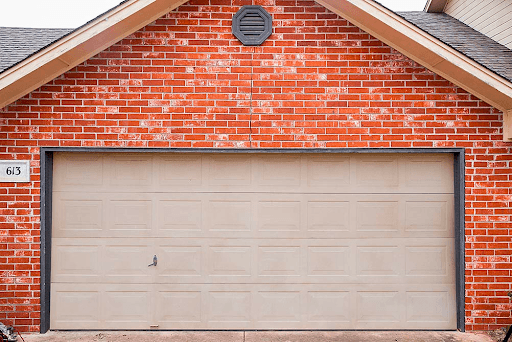
- A horizontal crack running along the mortar joint directly above the door — the classic first sign, and the one most often mistaken for ordinary settling
- Stair-step cracks climbing diagonally from the top corners of the opening
- Rust staining bleeding down the brick, or a visibly swollen, flaking steel edge above the door
- A lintel that has developed a sag or curve along its length
- Gaps opening between the lintel and the masonry it is supposed to be carrying
- Brick above the opening that sounds hollow or has begun to shift out of plane
- A garage door that has become harder to open or close, or that binds at one corner
The last one matters more than it looks. A door that suddenly binds usually means the opening is no longer square, and an opening goes out of square when the thing spanning it is deflecting. If your door installer has told you the track is fine, the lintel is worth looking at.
Why Lintels Fail in Triangle Homes
Rust jacking
This is the common one here, and it is not really a strength problem at first. When water reaches an unprotected steel lintel it corrodes, and the rust that forms occupies several times the volume of the steel it replaced. That expansion has nowhere to go but up, so it lifts the brick course sitting on it. The horizontal crack above your door is usually the mortar joint being pushed apart from below, not the wall settling from above. Left long enough, the section loses enough steel to stop carrying the load it was sized for.
Missing or failed flashing
Brick veneer is not waterproof — it absorbs water and drains it down the back face of the wall. Through-wall flashing above the lintel, with weep holes to let that water back out, is what keeps it off the steel. Plenty of homes were built without it, or with flashing that has since torn or been sealed over during a re-side or a paint job. When that detail is missing, the lintel stays wet after every rain, and rust jacking is only a matter of time. This is the root cause behind most of the failures we see, which is why replacing the steel without correcting the flashing just restarts the clock.
Too little bearing, or too long a span
A lintel has to rest solidly on masonry at both ends — typically at least four inches of bearing on each side. Where the original build cut that short, or where the opening was widened later without upsizing the steel, the lintel deflects under a load it was never sized for. Openings that were enlarged from a single to a double garage door are a recurring version of this.
Movement underneath it
A lintel can also be the symptom rather than the problem. If the masonry carrying one end has dropped, the lintel goes out of level with it and the cracking follows. That is a foundation question, not a masonry one, and it is why the inspection looks at the whole wall rather than just the opening — replacing the steel over a settling foundation buys you a repair that cracks again.
How We Repair a Garage Door Lintel
Every job starts with an inspection that establishes two things: how much of the steel is actually gone, and whether anything below the opening has moved. Those answers decide whether the lintel is repaired in place or replaced, and whether there is foundation work to do first. We photograph what we find and build the scope from it.
Where the lintel needs replacing, the work runs roughly like this:
- Temporarily support the masonry above the opening so the wall is carried while the lintel is out — usually shoring bearing on the slab, sized to the load above
- Carefully remove the brick courses over the lintel, salvaging brick where it can be reused so the repair matches the rest of the elevation
- Cut out and remove the failed steel
- Set new galvanized steel with full bearing at both ends, sized for the actual span rather than replacing like-for-like where the original was undersized
- Install through-wall flashing and open weep holes above the lintel, so water that gets into the veneer drains back out instead of sitting on the new steel
- Relay the brick and repoint, matching the existing mortar as closely as the original will allow
Where the steel is sound and the damage is confined to masonry and mortar, the repair is smaller — clean and treat the steel, rebuild the affected courses, correct the flashing detail, and repoint.
Repair or Replace?
It comes down to how much sound steel is left and whether the section was adequate to begin with. Surface rust on a lintel that is otherwise straight and well bearing is a repair. Section loss you can flake off with a screwdriver, a visible sag, or a span that was undersized from the start is a replacement — and a replacement is the only one of the two that lets us correct the bearing and the flashing at the same time.
One thing worth saying plainly: this is not a repair that improves with waiting. The masonry above the opening is being displaced a little more every wet season, and the amount of brick that has to come down — which is most of the cost — grows with it.
What to Expect
Most residential lintel replacements are a short job rather than a project, though the span, the amount of masonry coming down, and whether there is foundation work underneath all move that. We will give you the expected duration with the quote rather than after.
Practically: we need the driveway in front of the door and clear access to the opening, and you should plan on the garage door being out of service while the wall above it is shored. Cracks elsewhere in the same wall are worth mentioning when we come out — wall cracking around an opening often shares a cause with the lintel, and it is cheaper to look at both on one visit.
A lintel is load-bearing. If brick above your garage door has visibly moved, shifted out of plane, or sounds hollow, treat it as urgent and keep the area clear until it has been looked at.
Frequently Asked Questions
It's the structural member spanning the top of the garage door opening — usually a galvanized steel angle behind the brick, sometimes reinforced concrete. It carries the weight of everything above the opening and transfers it to the masonry on either side.
Most often corrosion. Water reaches unprotected steel, and the rust that forms takes up several times the volume of the steel it replaced, so it lifts the brick above it — that's what the horizontal crack over the door usually is. Missing or failed through-wall flashing is what let the water reach the steel in the first place. Inadequate bearing, an opening widened without upsizing the steel, and foundation movement under one end are the other causes we see.
It's load-bearing, so yes, it should be inspected promptly rather than watched. Most lintels degrade gradually and give you plenty of warning, but brick that has shifted out of plane or sounds hollow is a different situation — keep the area clear and get it looked at.
Both happen. If the steel is straight, properly bearing, and only surface-rusted, it can be cleaned, treated, and the masonry rebuilt around it. Real section loss, a visible sag, or a span that was undersized from the start calls for replacement — which is also the only version that lets us correct the bearing and add the flashing detail that prevents a repeat.
Because patching mortar treats the symptom. If the steel behind it is still corroding, it keeps expanding and keeps pushing the joint apart, so the new mortar cracks the same way. The repair only holds once the steel and the flashing that keeps water off it are dealt with.
It can be either, and telling them apart is the point of the inspection. Rust jacking pushes the masonry up from the lintel; foundation settlement drops the masonry that one end of the lintel bears on. They produce different crack patterns, and the fix for one does not solve the other — replacing steel over a settling foundation gets you a repair that cracks again.
Get in touch and tell us what you're seeing. The same failure mechanism applies over any masonry opening, and we'll confirm scope when we look at it.
Our Customers Love Us!



“Rob and his crew are super. I had a very big project to renovate a 130-year old farmhouse. They worked diligently to put in new piers, new girders, and new joists. Then they also help to fix some frames and add subfloor. This allowed me to move on. Really enjoyed working with Rob.”
Jack C.
Mar 2025
“Very professional! They carried out their task while going the extra mile. It was obvious to me that quality is of great importance. They left it better than they found it. I would recommend them to my greatest of friends and family.”
Jerry H.
Feb 2025
“After having some minor flooding issues, we contacted Triangle Reconstruction and they were amazing in their ability to identify the issues and the best way to address it. What was most impressive was the team that came out and did the work. They were probably the most professional and organized crew we've ever seen work on our house. Brian, our rep, and Rob, the owner, regularly checked in on their work and kept us updated on the progress. I hope I never have to deal with flooding issues again, but if I do, I'll call Triangle Reconstruction again.”
Greg M.
Nov 2024

Cracking above your garage door?
Fill out the form to book a time to meet with us and we will get back to you within 24 hours.