
Foundation Repair
Sinking Foundation Repair
A foundation that's visibly sinking is a structural problem, not a cosmetic one. We diagnose why it's moving and stop it with the right combination of support jacks, sister joists, drainage work, and helical piers.
What Causes a Sinking Foundation
Crawl space support pillars are sometimes built on soil that isn't strong enough to carry the weight of the home, and over time those supports sink into the soil, pulling the floor above down with them. In other cases, a home's support beams were spaced too far apart at construction, and the floor sags in the spans between supports. Long-term water intrusion and moisture under the home weaken the soil supporting those piers and rot structural wood, while foundation walls themselves can settle or buckle under pressure from expansive soil outside the home.
Signs to Watch For
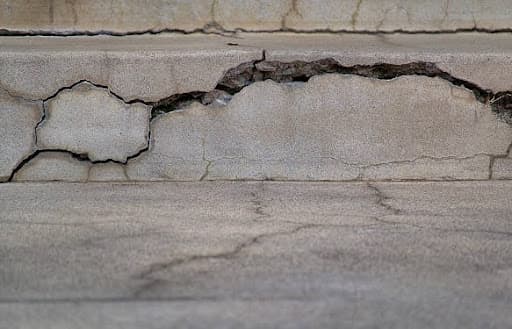
- Stair-step cracks in exterior walls
- Sagging or noticeably uneven floors
- Doors and windows that stick or won't latch properly
- New or widening cracks in interior walls
- Visible gaps or leaning at crawl space support piers
- Moisture or standing water in the crawl space
Is It the Foundation, or What's Under the House?
These get called the same thing and they are two different jobs with very different costs, so it is the first thing the inspection settles.
- Interior settlement. The crawl space support columns are sinking into the soil they were built on, taking the floor above with them. The perimeter foundation is fine. This is the more common of the two here, and the fix is support jacks and structural repair — a considerably smaller job.
- Perimeter foundation settlement. The foundation footing itself has lost bearing and a section of the house is going down with it. That is what helical piers are for.
The tell is usually where the damage shows. Sloping floors with no exterior cracking points inward, to the crawl space. Stair-step cracking through exterior brick, a chimney separating, or doors sticking on one end of the house points outward, to the footing.
Why Houses Settle Here
Mostly the clay. Triangle soil swells as it takes on water and shrinks as it dries, so a foundation resting on it rides up and down with the seasons. That is also why cracks often look worse in a dry spell and ease off after rain — the ground is moving, not the house alone.
Water makes it worse in both directions: chronic moisture under the house softens the soil that the crawl space supports bear on, and poor drainage around the perimeter keeps the clay outside in a permanent swell-and-shrink cycle. Which is why the drainage half of a quote is not padding — it is the reason the movement started.
How Urgent Is It?
Most settlement is slow, and a house that has moved a little over many years is not about to fall down. What matters more than the amount of movement is whether it is still moving. Cracks that reopen after being patched, doors that get harder to close month by month, or gaps that visibly widen are active settlement and worth acting on. Old, stable cracks that have not changed in years are a different conversation.
A simple way to tell: mark the ends of a crack with a pencil and date it. If it has moved in three months, it is active.
How We Fix It
After inspection, we address both the symptom and the cause. Support jacks reinforce sunken or under-spanned areas, sister joists reinforce weakened floor joists, and drainage and moisture control — French drains, sump pumps — address water intrusion before it does more damage. Where a foundation has lost bearing support entirely, helical piers lift and permanently stabilize it. If chronic moisture has led to mold, we remove it and fix the moisture source so it doesn't come back.
Catching a sinking foundation early keeps repairs smaller and cheaper. The longer it's ignored, the more the floors, walls, and framing move with it.
Frequently Asked Questions
Minor hairline cracks are common as homes age. Stair-step cracks, doors and windows that stick, and floors that visibly slope are signs of active movement worth having inspected.
Yes, with the right combination of support jacks, sister joists, and helical piers depending on what's causing the movement.
Local soil conditions are a common factor — soil that isn't strong enough to bear the home's weight over time — often made worse by water intrusion softening the soil under the supports.
Yes. Chronic moisture rots structural wood and destabilizes the soil under supports, compounding the problem, which is why drainage and moisture control are often part of the repair plan.
Our Customers Love Us!



“Rob and his crew are super. I had a very big project to renovate a 130-year old farmhouse. They worked diligently to put in new piers, new girders, and new joists. Then they also help to fix some frames and add subfloor. This allowed me to move on. Really enjoyed working with Rob.”
Jack C.
Mar 2025
“Very professional! They carried out their task while going the extra mile. It was obvious to me that quality is of great importance. They left it better than they found it. I would recommend them to my greatest of friends and family.”
Jerry H.
Feb 2025
“After having some minor flooding issues, we contacted Triangle Reconstruction and they were amazing in their ability to identify the issues and the best way to address it. What was most impressive was the team that came out and did the work. They were probably the most professional and organized crew we've ever seen work on our house. Brian, our rep, and Rob, the owner, regularly checked in on their work and kept us updated on the progress. I hope I never have to deal with flooding issues again, but if I do, I'll call Triangle Reconstruction again.”
Greg M.
Nov 2024

Part of your house going down?
Fill out the form to book a time to meet with us and we will get back to you within 24 hours.