Attic Solutions
R-Value Facts
R-value measures a material's resistance to heat flow — the higher the R-value, the more effective the insulation.
What R-Value Means
Insulation is measured by its thermal resistance, or R-value. "R" stands for the insulation's resistance to heat flow. House insulation should be selected based on its R-value, not its thickness or weight.
R-Value Facts to Know
- One type of insulation may be thicker or thinner than another, but if the R-value is the same, they should insulate equally.
- R-value performance testing is done in a 70°F environment with no air movement.
- Insulation dramatically outperforms dense mass materials like concrete or brick for thermal resistance per inch — which is why even a modest, properly installed layer of insulation makes a measurable difference.
- The effective R-value of house insulation is substantially reduced by any air leaks or moisture intrusion.
- The recommended R-value for house insulation varies based on climate and region.
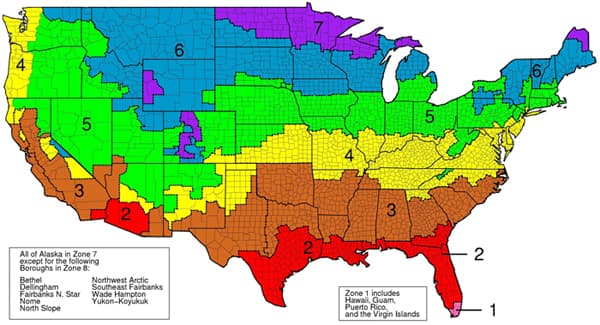
The U.S. Department of Energy has established minimum recommended insulation R-values by climate zone, mapped above. The Triangle area, including Cary, NC, falls within Zone 4.
Why the Number on the Bag Isn't What You Get
R-value is measured in a laboratory: 70°F, still air, the material installed perfectly. An attic is none of those things, and the gap between the rated figure and the installed performance is where most disappointment comes from.
- Compression. Batts squashed into a space shallower than their rated thickness lose R-value in proportion. A compressed R-19 batt is not R-19.
- Gaps. Insulation is only working where it actually is. Missed areas, cut-outs around obstacles and settled low spots all pull the average down further than their size suggests.
- Air movement. The rating assumes still air. Air moving through or past insulation carries heat with it regardless of the number, which is why air sealing does more than it looks like it should.
- Moisture. Wet insulation loses most of its resistance, and stays lost. A batt that has been soaked does not come back when it dries.
R-Value and Radiant Heat Are Different Things
R-value describes resistance to conducted heat — heat moving through a material. It does not describe reflection. A radiant barrier works on radiant heat instead, which is why its performance is not expressed as an R-value and why comparing the two by that number is comparing different things.
In a hot attic both matter, which is why the two are often installed together rather than as alternatives.
Frequently Asked Questions
Cary falls within the U.S. Department of Energy's Zone 4, which has its own set of recommended minimum R-values. Because the right target also depends on your home's construction and existing insulation, an inspection is the best way to get a specific recommendation.
No. R-value depends on the material and how it's installed, not just thickness. Two products with different thicknesses can have the same R-value, and insulation should be chosen and compared by R-value rather than by how thick or heavy it feels.
Yes. R-value ratings are tested in still, dry conditions, so any air movement or moisture getting into the insulation in your actual attic will lower its real-world performance below the rated value.
Because that number comes from a laboratory: 70°F, still air, installed perfectly. An attic is none of those. Compression is the usual culprit — a batt squashed into a shallower space loses R-value in proportion — along with gaps where the insulation simply is not, air moving through or past it, and moisture. Wet insulation loses most of its resistance and does not recover when it dries.
No, and treating it that way is why some jobs disappoint. R-value describes resistance to heat conducted through a material. It says nothing about air moving straight past that material, which is why air sealing an attic often does more than adding depth, and nothing about radiant heat, which is what a radiant barrier addresses. A well-performing attic usually needs all three considered together.
Depth is the practical proxy, and you can get a rough read yourself: put a ruler into the insulation in a few different spots away from the hatch, and note how deep it is and whether it is even. Different materials give different R-value per inch, so depth alone does not settle it — but consistently shallow or patchy insulation tells you most of what you need to know before anyone comes out. Bring a light, stay on the joists, and do not stand on the ceiling between them.
Our Customers Love Us!



“Rob and his crew are super. I had a very big project to renovate a 130-year old farmhouse. They worked diligently to put in new piers, new girders, and new joists. Then they also help to fix some frames and add subfloor. This allowed me to move on. Really enjoyed working with Rob.”
Jack C.
Mar 2025
“Very professional! They carried out their task while going the extra mile. It was obvious to me that quality is of great importance. They left it better than they found it. I would recommend them to my greatest of friends and family.”
Jerry H.
Feb 2025
“After having some minor flooding issues, we contacted Triangle Reconstruction and they were amazing in their ability to identify the issues and the best way to address it. What was most impressive was the team that came out and did the work. They were probably the most professional and organized crew we've ever seen work on our house. Brian, our rep, and Rob, the owner, regularly checked in on their work and kept us updated on the progress. I hope I never have to deal with flooding issues again, but if I do, I'll call Triangle Reconstruction again.”
Greg M.
Nov 2024

Not sure what you have up there?
Fill out the form to book a time to meet with us and we will get back to you within 24 hours.